 English
 Español

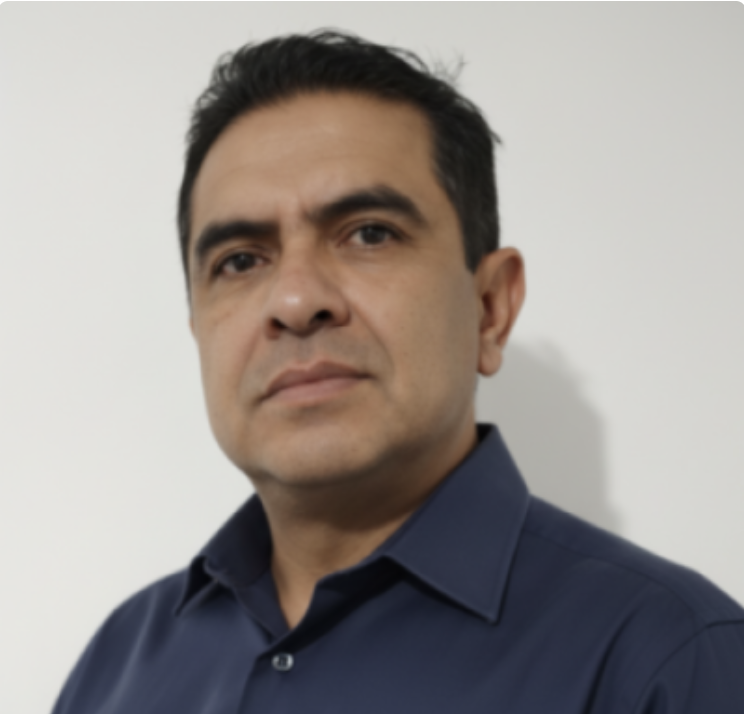
Nanotechnology specialist and professor with experience in computational modeling and experimental nanomaterial synthesis.
His work blends theoretical and applied nanotechnology, with a focus on semiconductors like silicon carbide (SiC), silicon (Si), and carbon (C), with contributions to both academic and practical domains. José Luis is skilled in DFT tools (SIESTA, CASTEP), sol-gel synthesis, and software like Materials Studio, Origin, LaTeX, and Spring Boot (a JS framework).
José Luis is experienced in theoretical nanotechnology. He employs DFT tools such as SIESTA and CASTEP to investigate the electronic properties, surface passivation (using hydrogen, nitrogen, or oxygen), doping effects (with copper, boron, or lithium), and chemical stability of SiC, Si, and C in nanowires, quantum dots, and nanoporous structures. He also conducted ab initio studies on chitosan adsorption in ZnO nanowires and lithium doping in SiC nanostructures. He has made theoretical investigations into the properties of beta-silicon carbide (B-SiC) nanowires and efforts to manipulate the electronic band gap of semiconductor materials.
José Luis is also experieinced in experimental nanomaterial synthesis. He uses the sol-gel method to develop oxide nanomaterials like TiO2 and ZnO for bactericidal and medical applications. His work on copper-doped TiO2 nanoparticles demonstrated their ability to degrade E. coli DNA. He also synthesized TiO2 nanoparticles doped with copper and cis-platinum, creating computer models to predict their response to laser light in Raman spectroscopy for medical applications like cancer, epilepsy, and diabetic foot treatments.
As a current professor at Universidad Tecnológica Emiliano Zapata, José Luis teaches mathematics and physics while leading DFT-based projects on SiC quantum dots. At Yachay Tech University, he taught physics, engineering, nano-biomaterials, and DFT methodology. At Metropolitan Autonomous University, he taught nano-biomaterials to medical students.